Tip 1: visualize the entire project flow on one slide.
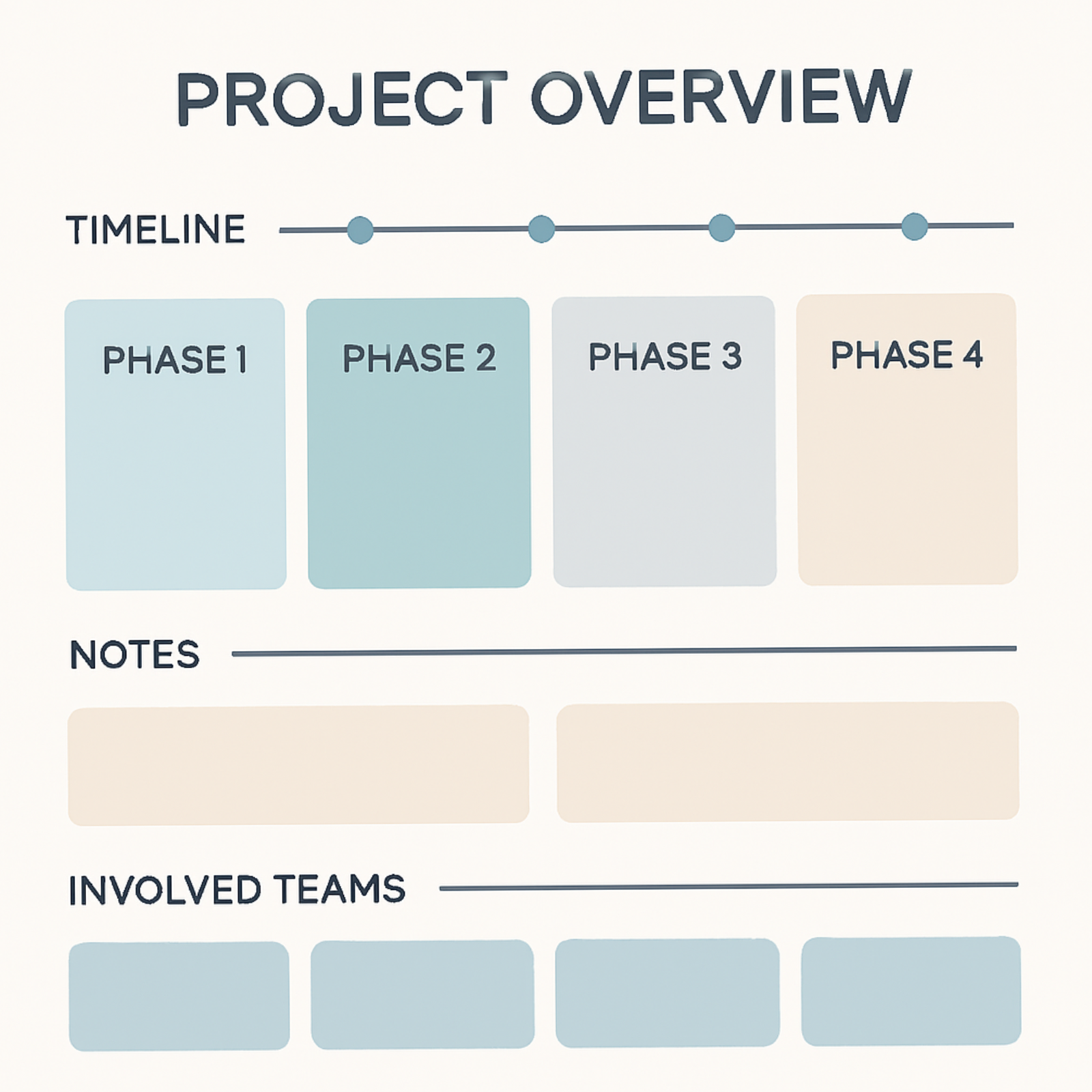
People want to know where they are, where they’re headed and if they’re progressing on schedule. You can summarize a project on one slide or image. Have the time line on top, add project phases in blocks below.
Putting it in one slide forces you simplify the phases. You won’t have to look at this everyday. Use this at the start of periodic team meetings, and then move on.
This works for any project, be it Agile, Prince2 or whatever. It’s about giving overview. This overview is transparent, and this transparency also increases ownership, and warns early on if you’re veering off course.
Simplicity for project managers
Running projects is fun as long as your team feels in control of where it’s going. It’s up to you to make the team feel in control. Overview helps with that, and to keep overview you need to keep things simple.
Here, you’ll find practical advice here that speaks less methodology, more real-world action.
Tip 2: define the minimum viable product.
Whether you’re doing Agile or not, having a sense of the absolute minimum you and your team need to deliver to get the desired outcome, helps reduce the work needed and do away with unnecessary details.
Defining a minimum viable product means you do less work, with less hours and costs, and get to launch sooner.
And because you launch sooner, you’ll learn about how the product delivers, meaning you can start improving.

Tip 3: hand over responsibility.
Especially with larger projects, you shouldn’t be the one keeping track of all the details.
You need ensure the details are being tracked, but is tracking details really your job? And can you at all understand all the details of different topics? The answer to both questions is… no.
Once you start tracking details, your team will start handing over the monitoring of their work details to you. That’s a recipe for disaster.
Only track the things that are essential for success. They should be specific, but never details.